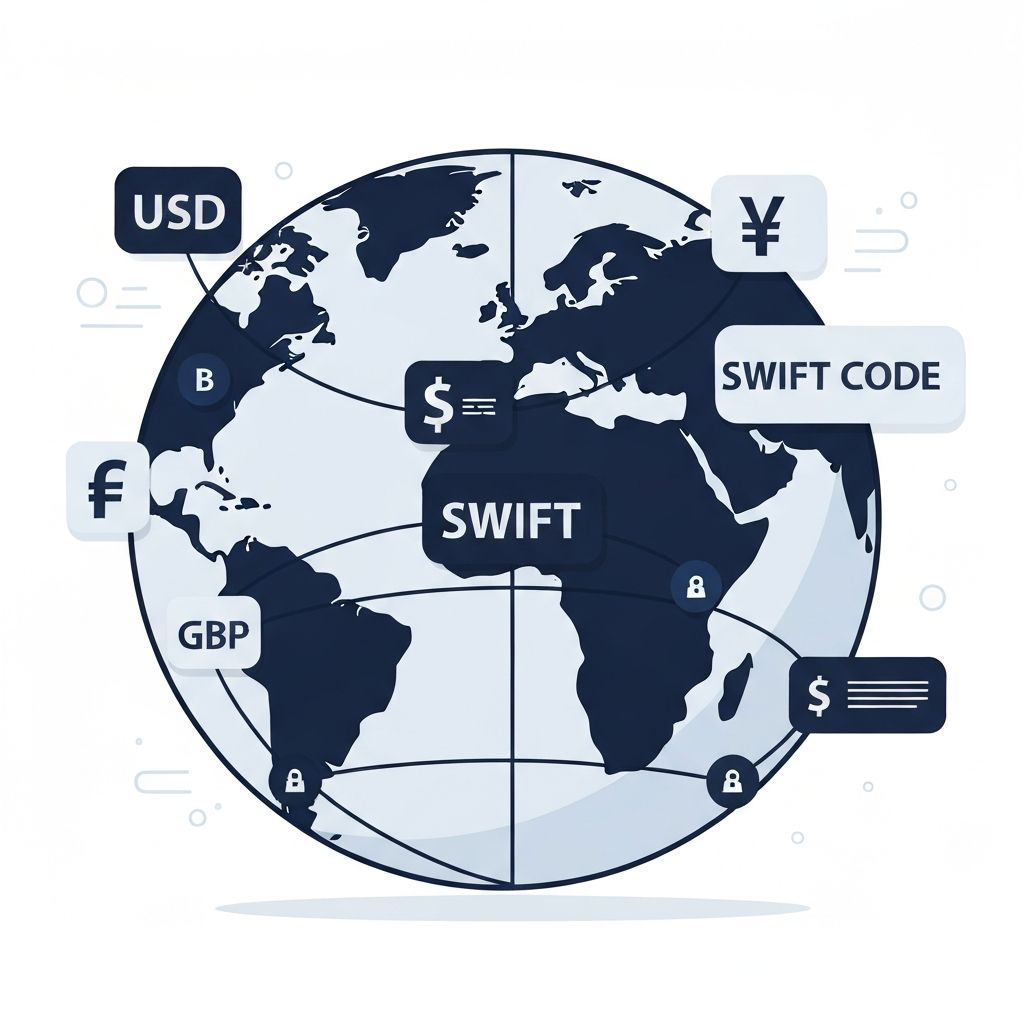
What is SWIFT?
SWIFT (Society for Worldwide Interbank Financial Telecommunication) is a messaging network that financial institutions use to securely transmit information and instructions through a standardized system of codes. Founded in 1973, SWIFT doesn't actually move money - it sends payment orders that must be settled by correspondent accounts.
When you make an international wire transfer, SWIFT provides the secure communication channel between banks. Each bank has a unique BIC (Bank Identifier Code), also known as a SWIFT code, which identifies them in the network.
How SWIFT Transfers Work
Initiate
You provide recipient details and amount to your bank
Message
Your bank sends a SWIFT message to the recipient's bank
Process
Banks settle through correspondent accounts
Complete
Funds credited to recipient's account
SWIFT Transfer Fees
SWIFT transfers typically involve multiple fees that can add up:
| Fee Type | Typical Amount | Who Pays |
|---|---|---|
| Sending Bank Fee | $15 - $50 | Sender |
| Correspondent Bank Fee | $10 - $30 each | Deducted from transfer |
| Receiving Bank Fee | $10 - $25 | Recipient or Sender |
| Currency Conversion | 1% - 4% margin | Sender/Recipient |
Fee Payment Options (SHA, OUR, BEN)
- SHA (Shared): Sender pays sending fees, recipient pays receiving fees. Most common option.
- OUR: Sender pays all fees. Recipient receives full amount, but total cost is higher.
- BEN: Recipient pays all fees. Fees are deducted from the transfer amount.
Processing Times
| Destination | Typical Time | Factors |
|---|---|---|
| Same Currency (USD to USD) | 1-2 business days | Direct correspondent relationship |
| Major Currencies (EUR, GBP) | 1-3 business days | Well-established routes |
| Other Currencies | 3-5 business days | May require multiple intermediaries |
| Emerging Markets | 5-7 business days | Additional compliance checks |