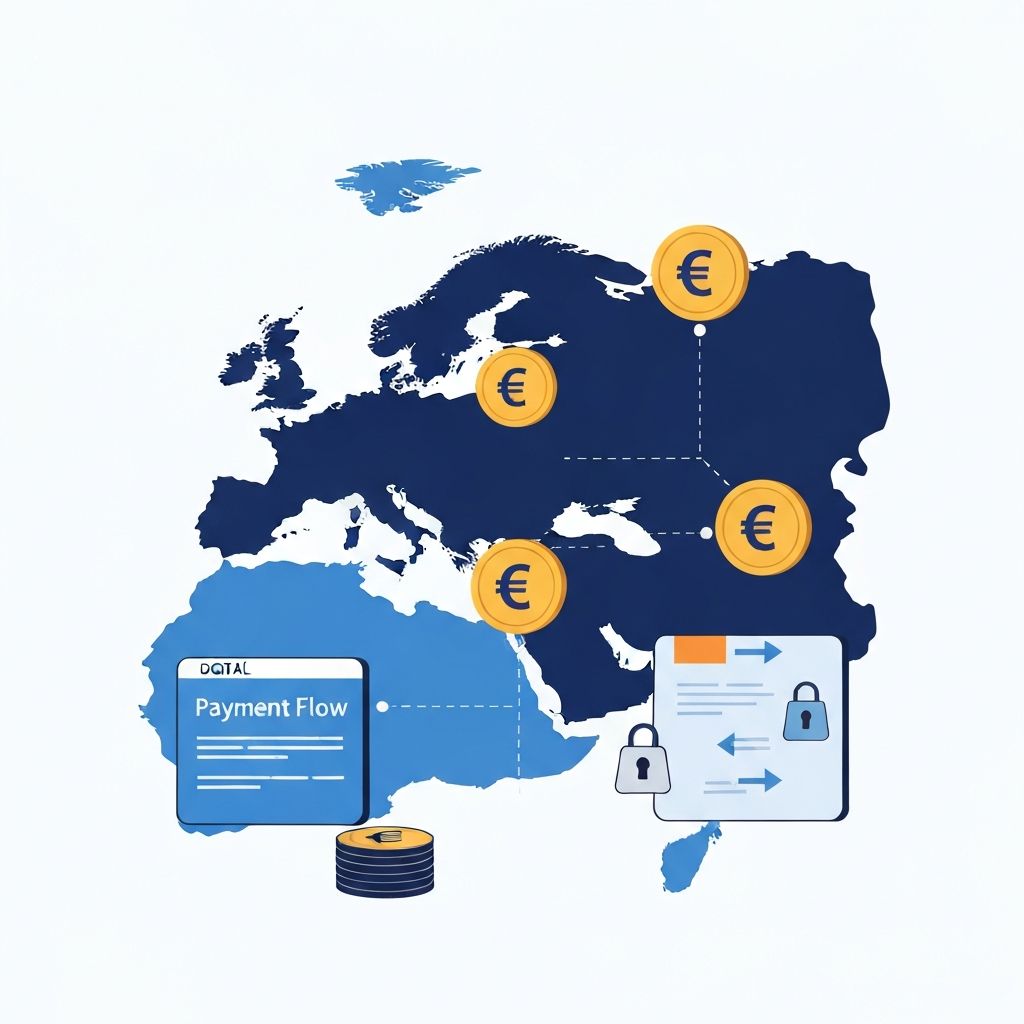
What is SEPA?
SEPA (Single Euro Payments Area) is a payment integration initiative of the European Union designed to simplify bank transfers denominated in euros. It allows consumers, businesses, and public administrations to make and receive payments in euro under the same basic conditions, rights, and obligations.
Since its full implementation in 2014, SEPA has standardized the way euro payments are processed across member countries, making cross-border transfers within the zone as simple and affordable as domestic ones.
Types of SEPA Transfers
SEPA Credit Transfer (SCT)
Standard bank-to-bank transfers completed within 1 business day. Most common for personal and business payments.
SEPA Instant (SCT Inst)
Real-time transfers completed within 10 seconds, available 24/7/365. Growing adoption across European banks.
SEPA Direct Debit (SDD)
Automated recurring payments where the payee initiates collection from your account. Used for subscriptions and bills.
SEPA Participating Countries
SEPA currently includes 36 countries - all EU member states plus additional European countries:
| Region | Countries |
|---|---|
| EU Members | Austria, Belgium, Bulgaria, Croatia, Cyprus, Czech Republic, Denmark, Estonia, Finland, France, Germany, Greece, Hungary, Ireland, Italy, Latvia, Lithuania, Luxembourg, Malta, Netherlands, Poland, Portugal, Romania, Slovakia, Slovenia, Spain, Sweden |
| EEA Countries | Iceland, Liechtenstein, Norway |
| Other Members | Switzerland, Monaco, San Marino, Andorra, Vatican City, United Kingdom |
SEPA Transfer Fees
One of the main benefits of SEPA is the low cost. EU regulations require that SEPA transfers be priced the same as domestic transfers.
| Transfer Type | Typical Fee | Processing Time |
|---|---|---|
| SEPA Credit Transfer | Free - €1.50 | 1 business day |
| SEPA Instant | €0.50 - €2.00 | 10 seconds |
| SEPA Direct Debit | Free - €0.50 | 2-3 business days |